



blog

Tending and Curating
Our inheritance and legacy
- Tags:
- Church
- ,
- Church Building
- ,
- Churchwarden
- ,
- Church Buildings
- ,
- Church Fabric


Should Stained Glass be Cleaned?
Lincolnshire churches contain a rich legacy of stained glass, much of it produced by major Victorian studios and their care can be challenging.
The church buildings team have put together some helpful advice on caring for these beautiful but delicate works of art.
Lincolnshire churches have a rich heritage of stained glass and visit any church in the county and you are sure to find windows by one of the large Victorian studios. It takes an expert to identify the studio which manufactured the windows and it also takes an expert to inspect the state of repair of the windows and to give some professional advice.
Most church wardens are eager to find out how to clean their stained-glass windows and a standard reply of any conservator should be; ‘very carefully!’ Particular medieval glass, which is extremely delicate and the advice here is; ‘Do not attempt to clean and if in doubt call an accredited conservator!’
Some Victorian and early twentieth-century stained glass can look dirty, particularly on the outside. This is debatable, and what you may think is dirt could actually be a build-up of a natural patination with the glass being constantly exposed to the elements and pollutants. Over many decades this has affected the external surface of the glass and the pollutants and dirt will have built up to a thin, but tenacious layer which has almost etched itself into the glass substrate. Actually, this layer is quite beneficial and it enables the glass to hold the light. Some stained-glass studios have intentionally painted a thin wash on the exterior surface of the glass as part of the design in order to create an artificial patination of age so that the light is held there. Once this layer has been removed, there is no going back. So, the advice is; leave well alone and call a conservator to give you that professional advice if you think your glass is dirty on the outside.
On a number of occasions, the question is asked by church wardens how to clean the inside of a stained-glass window. It is understanding the medium and the intention of the designer and the glass painters and having that prior knowledge helps to determine what is paint, what is lose dirt and what is tenacious grime. A number of Victorian studios are well known to have unintentionally produced windows where the vitreous paint is highly unstable.
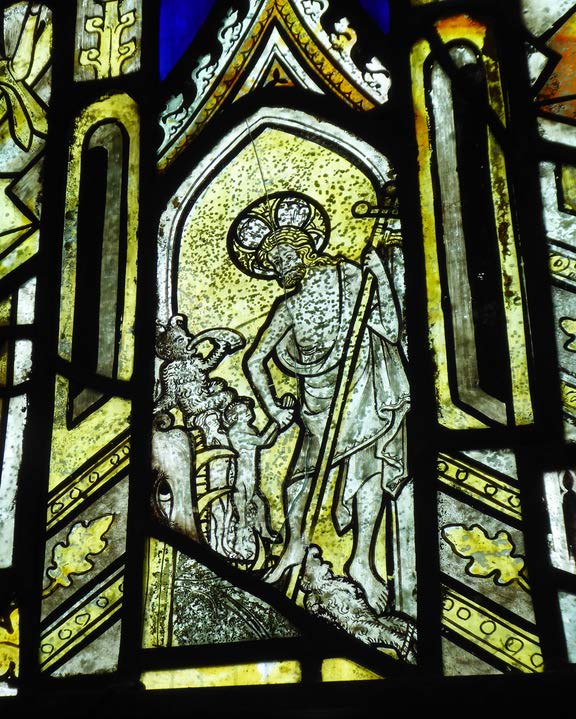
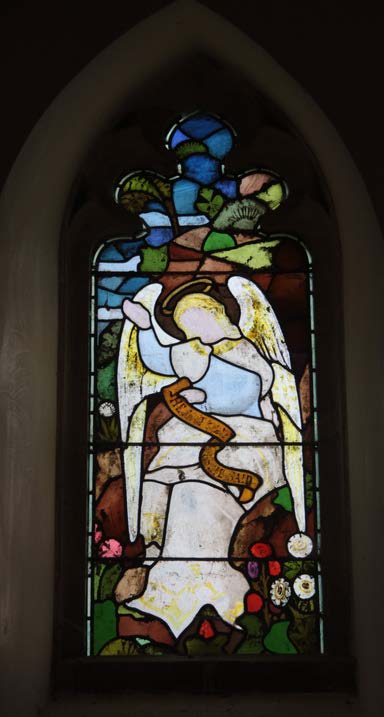
In combination with excessive moisture/condensation inside the church and overzealous cleaning, this can have a detrimental effect. The issue of paint-loss is well understood by stained-glass conservators and again if there are any signs of thinning paint or paint loss on your painted stained glass and you are intending to clean the window; DON’T! Call a conservator who will give some professional advice.
On a number of occasions, the question is asked by church wardens how to clean the inside of a stained-glass window. It is understanding the medium and the intention of the designer and the glass painters and having that prior knowledge helps to determine what is paint, what is lose dirt and what is tenacious grime. A number of Victorian studios are well known to have unintentionally produced windows where the vitreous paint is highly unstable.
There are some occasions where a light cleaning of your plain and stained glass is part of the church warden’s good housekeeping regime. Using a soft long-haired brush, like a painters brush to dust off any lose dirt and cobwebs on the outside of the window is acceptable. We all know the mess pigeons can leave behind and with Marigolds at the ready and using some warm water together with a drop of mild detergent and a soft sponge it does no harm to remove the guano but avoid cleaning the whole window.
Cleaning the inside of a painted window is a little more delicate and using a long handled soft feather duster removing cobwebs and loose dirt is mostly acceptable. It gives the church wardens also the opportunity to get close to their windows, looking out for any cracks or holes and monitor the general condition of the windows. Most windows are located at height and whatever you do, please consider Health & Safety particularly going up step-ladders, and please take someone with you to help and assist. If you are unsure about the stability of the vitreous paint or the glass, don’t clean it and get in touch with a professional accredited conservator and of course your architect, who plays a critical role in understanding and maintaining the fabric of your church. You can also contact the DAC and ask advice which can be specifically tailored to your windows.