


article

Worship and Spirituality
How we encounter God
- Tags:
- Environment
- ,
- Creation
- ,
- Worship
- ,
- Bible Study
- ,
- Liturgy
- ,
- Reader
- ,
- Clergy
- ,
- Focal Minister


‘Hope for all Creation’ is the focus of this year’s Season of Creation 2026. Creation-tide runs from 1st September to the 4th October 2026, with special liturgical resources for the new ‘Feast of Creation in Christ’, on the first Sunday in September. Below are a range of worship, theological and practical resources helping us explore these year’s theme, and for use across the year.
Welcome to the resources page for Creation-tide 2026. Here you will find a range of theological, liturgical and practical resources to help churches mark this important season in the church year.
New Theological Resources for 2026
Hope for all Creation
God was pleased to reconcile
to himself all things, whether on earth or in heaven, by making peace through the blood of his cross.Colossians 1.20
The Church of England’s Faith and Order Commission has recently published a new landmark theological teaching paper from the House of Bishops. It is a theological framing of the environmental crises that mark out this era. It also provides a theological rationale to the new ‘Feast of Creation in Christ’ to be celebrated on the first Sunday in September.
Hope for all creation is set out in four sections:
Introduction: the purpose and background to the document, framed by previous C of E statements on the Environment.
‘See’: Outlines the environmental crises, challenges and scientific insights.
‘Reflect’: Anglican theological reflections, drawing on Scripture and Tradition.
‘Respond’: Calling the church to action, offering ways to respond at individual, local, national and global levels, with practical suggestions from Anglicans from all walks of life.
A wave of supporting documents and alternative ways of engaging will be released by the national church over the coming months. Watch this space!
New Liturgical Resources for the Feast of Creation In Christ
Common Worship has adopted a new liturgical festival. Click the button to go a dedicated page of liturgical materials for the Feast of Creation in Christ, for the first Sunday in September. With an order of service for a Service of the Word, Homily, liturgical materials for the Eucharist, and ideas for hymns and music.
Ecumenical Season of Creation 2026 ‘Immersed in Living Waters’
“Swarms of living creatures will live wherever the river flows. There will
Isaiah 47:9, 12
be large numbers of fish, because this water flows there and makes
the salt water fresh; so where the river flows everything will live. […]
Fruit trees of all kinds will grow on both banks of the river. Their leaves
will not wither, nor will their fruit fail. Every month they will bear fruit,
because the water from the sanctuary flows to them. Their fruit will
serve for food and their leaves for healing.
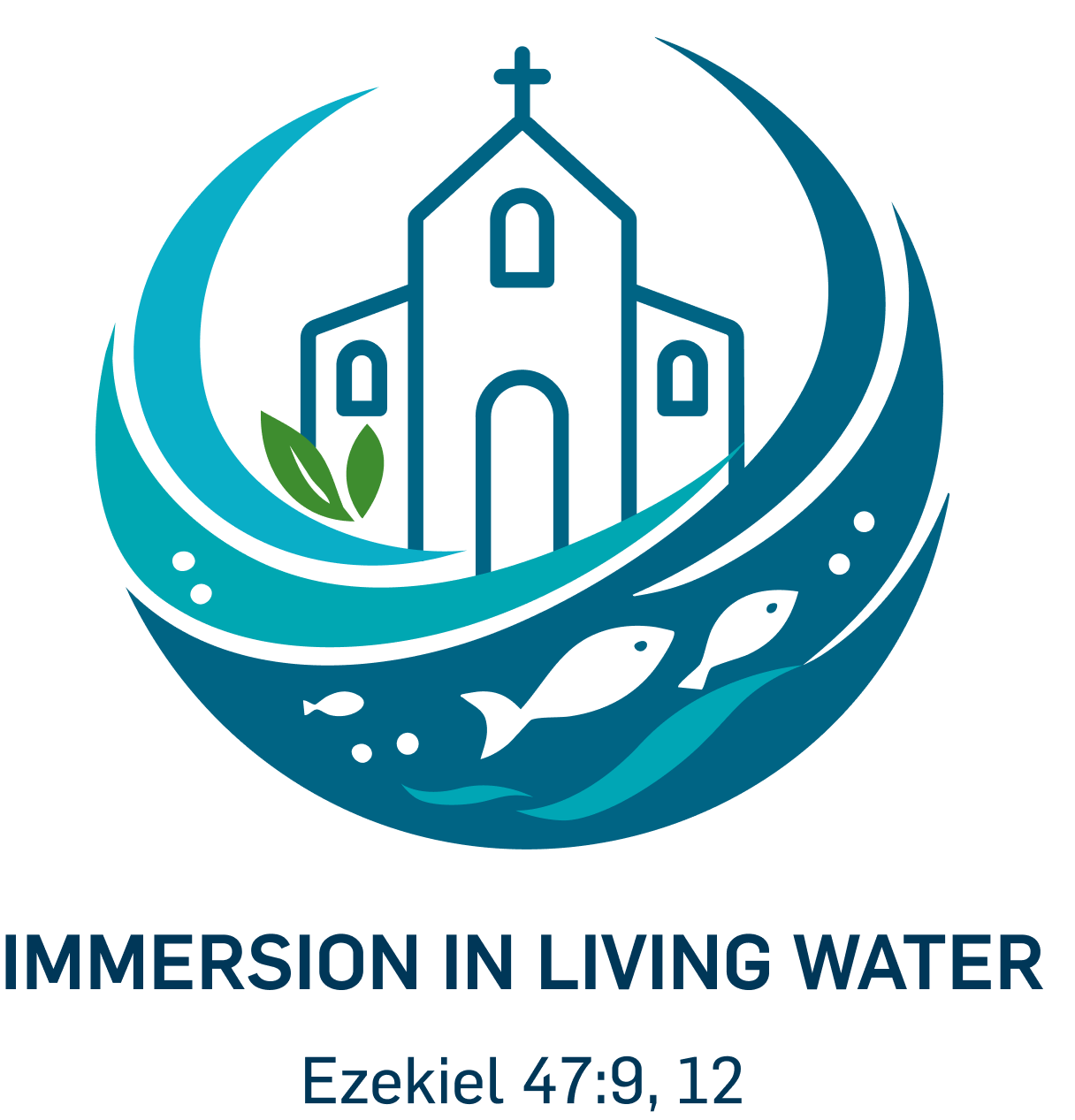
This year’s theme, “Living Water”, explores Ezekiel 47:9 and 12 as a powerful biblical vision of hope and ecological healing. Set amid exile and loss, the image of living water flowing from God’s sanctuary
reveals divine healing that renews land, water, biodiversity, and human
responsibility towards the whole creation.
The symbol depicts water flowing from the Temple of God – at first a tiny stream that grows deeper, and deeper and as it does so, it brings life to dead areas and restores fertility to damaged or barren
ecosystems. Through living water comes healing; but in order to receive new life, we too must step into the water and also become part of God’s river of life, taking part in the healing of creation.
With reflections, liturgy, intercessions and some suggested responses and actions, this is a very useful ecumenical and global guide to the season.
Season of Creation resources are supported by an ecumenical advisory committee and steering committee, plus a coalition of sponsors and partners from around the world, including A Rocha International, ACT Alliance, Anglican Communion, Christian Aid, European Christian Environmental Network, Laudato Si’ Movement, and the World Council of Churches (WCC).
Prayer 2026:
Living Water, Holy God, whose Spirit hovered over the waters at the beginning, we gather as part of your community of all creation, thirsty for your grace.
We give thanks for the gift of water, the veins of our common home, that sustains the cedar and the whale, the pasture and the city. We are grateful for the local waters that nourish our homelands and our fellow creatures. We give thanks that in your well-watered garden, every drop is a sacred testament to your love.
Yet, we confess that we have treated this gift as a mere commodity. We have
choked the seas with our waste and watched the warming tides rise in judgment.
We lament the cracked earth of the drought-stricken and the salty tears of the
climate refugee. Melt our frozen hearts, O God, and let the waters of repentance
flow.Lord of all Life, you promised that wherever the river flows, everything shall live.
Stir in us a calling to care for the waters — to protect the watershed, defend the
rights of water, and honor the dignity of the thirsty. May your Word be a spring
within us, gushing forth for the healing of the nations.May God our Father who brought water from the rock sustain us in the desert. May Christ our Lord who is Living Water refresh us for the work of restoration. And may the Holy Spirit carry us on currents of grace until justice rolls down like waters and righteousness like an ever-flowing stream. Amen.
Liturgies and Prayers for Creation-tide
Here are some tried and tested liturgies and liturgical resources from across the diocese of the Church of England:
- ‘A Time for Creation’ Prayers, liturgies and seasonal materials published by Church House Publishing 2020. Copyright © The Archbishops’ Council
- The full range of denominational resources for the Feast of Creation in Christ from the World Council of Churches
- A ‘Songs of Praise‘ style Service of the Word Liturgy for Creation-tide
- A Service of the Word for Creation-tide
- Order of Service for Holy Communion in Creation-Tide
- ‘Choose Life’ a year of reflections, prayers, actions and liturgical resources from the Diocese of York, pp166 – 184 for Creation-tide
- Prayers from Indigenous Voices for the Season of Creation 2025 from the Anglican Communion Environment Network
- An extensive hub for all Prayer, Worship and Teaching resources from the Church of England.
Homilies and Preaching Notes for the Season of Creation and Harvest (released 2 weeks prior)
Practical Activities for Creation-tide
- Join with over 4000 churches across the UK and sign up to Eco Church today!
- Target 25, A Rocha’s focus on key species and habitats and risk and how to use our outdoor spaces to help monitor and protect them for the future.
- Book an Energy Audit with George Davies, the Net Zero Carbon Programme Enabler.
- Sign up to the Bishop’s Study Day ‘Hope for all Creation’ on 17th October 2026.
Small Group Resources
Creation-tide Discussion Materials to be used over 5 weeks in groups or individually.
A 5-session bible study resource on ‘A Christian look at the Environment’ from the John Ray Institute.
Re-imagining our World Together – contextual bible study tools around the process of ‘see-Judge-Act’ developed by the Anglican Communion, integrating the Five Marks of Mission with the Sustainable Development Goals.
Resources for CYF Ministry
How do we encourage and support our children, youth and families to encounter God in creation and care for our world?
A Rocha Aotearoa New Zealand have published an excellent free resource for children aged 5-11 which has been edited locally to include Lincolnshire examples. It is an experiential and contemplative approach where children connect to God, each other and the natural world around them by connecting to and becoming aware of God’s Creation and discovering together how to act with love, care and responsible, compassionate action within it.
Other helpful websites
- Preaching for God’s World – Lectionary based Preaching notes helping clergy, lay preachers and all Christians to explore the set readings for each week from the perspective of creation care and ecological justice.
- A’Rocha Eco Church resources for the Season of Creation 2026
- Green Christian Season of Creation Hub page
- Creation-tide resources | The Church of England
- Anglican Communion Environmental Network resources